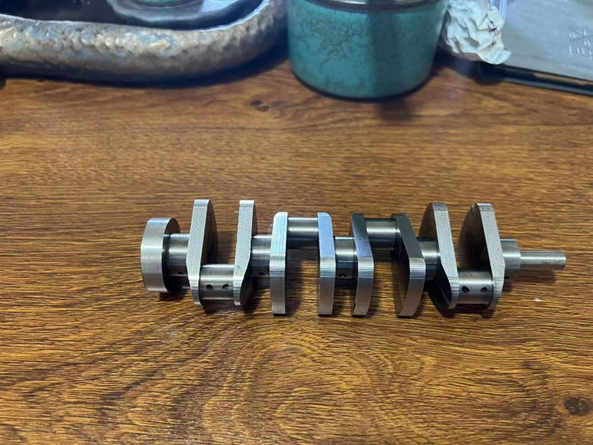
In order to maximize the restoration of the real car engine, we fully consider the design of the lubrication system when designing the engine, and consider the implementation of lubrication function in key parts of the motion.
Engine lubrication diagram
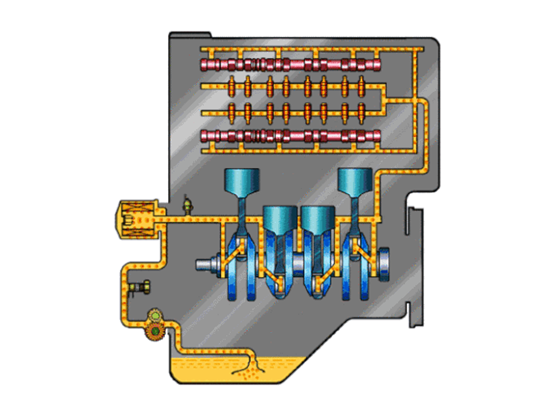
Observing the above picture, the engine oil is pumped through the oil pump to the main pipeline. After passing through the oil filter, it is pumped to lubrication positions such as the crankshaft and camshaft, forming an oil film at the moving friction parts to achieve lubrication and wear resistance.
Introduction diagram of crankshaft
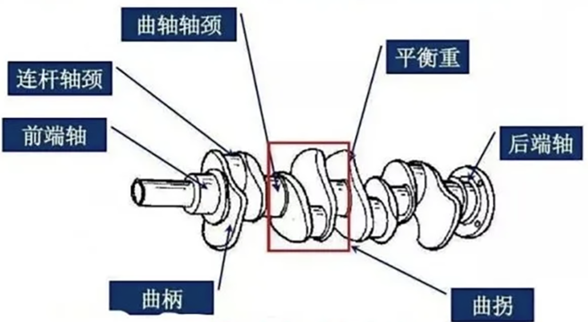
The crankshaft oil hole is an important part of engine design, which mainly provides sufficient lubricating oil for the crankshaft during engine operation to ensure lubrication and cooling of the crankshaft.
1. Lubrication: When the engine is running, the crankshaft needs to withstand tremendous friction. Oil holes can ensure that lubricating oil can reach various moving parts of the crankshaft, reduce wear, and extend the service life of the crankshaft.
2. Cooling: During engine operation, components such as the crankshaft and bearings generate a large amount of heat. The lubricating oil in the oil hole can take away some heat, lower the temperature of the crankshaft, and prevent the engine from overheating.
3. Cleaning: Lubricating oil can remove dirt and metal debris from the surface of the crankshaft during circulation, keeping the crankshaft clean.
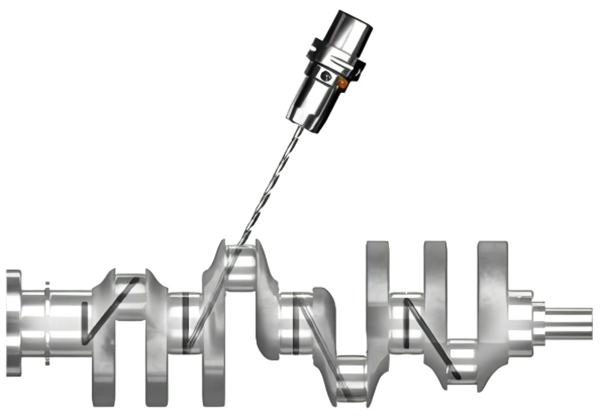
fter fully understanding the structure and construction of the crankshaft, we have designed oil passages on the V8, V10, and V12 crankshafts through multiple demonstrations and consultations. The V-shaped engine has multiple crankshafts, each with two connecting rods installed, which require two oil passages for lubrication. Drilling oil passages is a major challenge. After multiple demonstrations and experiments, we finally completed this function with the support of a five axis lathe.
Processing method diagram
Final product drawing